New Camera · Sigma FP2 · Full Frame · L-Mount · Hybrid Photo & Cinema
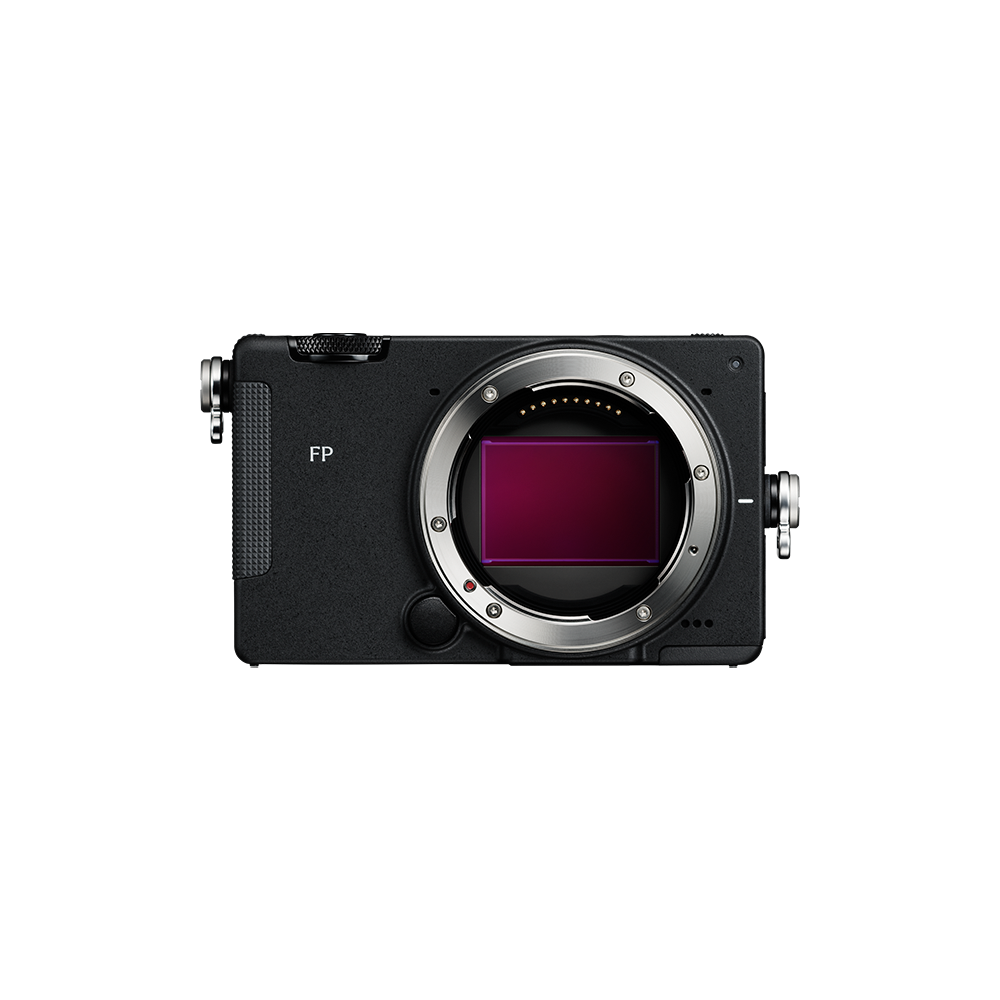
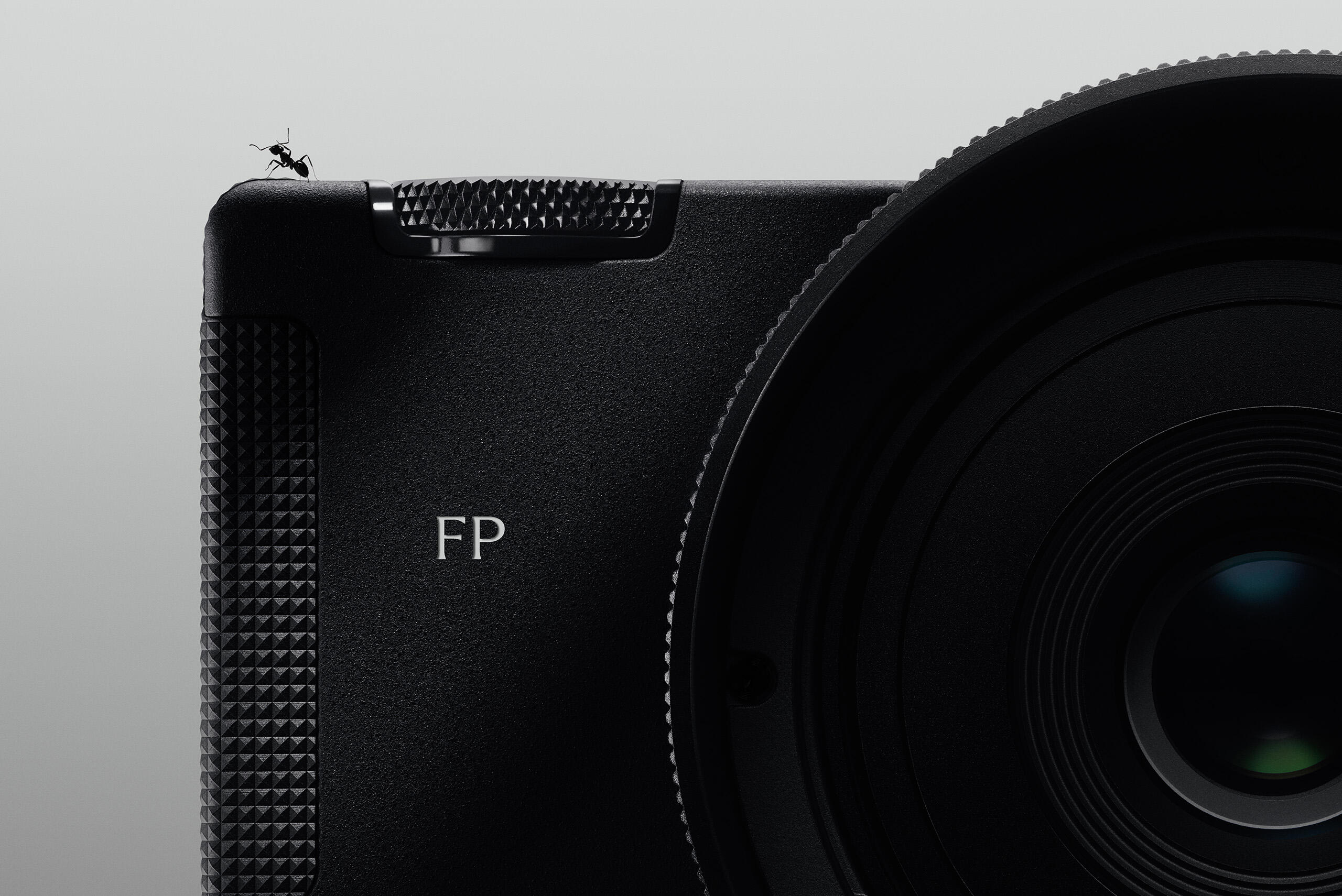
The Sigma FP2 keeps the original fp idea — an unusually small modular full-frame camera — but changes what that concept can realistically do. A new 24.5MP partially stacked CMOS sensor brings faster readout and reduced rolling shutter, hybrid phase-detection autofocus adds proper subject tracking, continuous shooting rises to 20fps, and the cinema side now reaches 6K Open Gate with ProRes RAW and L-Log. The result is still unmistakably fp, but considerably more capable as both a photography camera and a compact filmmaking tool.
Sigma announced the FP2 in October 2026, with official availability scheduled for 11 November 2026. Wex Photo Video is listing the camera in three particularly useful configurations: the Sigma FP2 body, the FP2 with EVF-21 electronic viewfinder, and the FP2 with Sigma 50mm F2 DG Contemporary.
The important question is not simply whether the FP2 has better specifications than the original fp. It clearly does. The more useful question is whether Sigma has finally made the ultra-compact fp concept practical enough to work as a primary hybrid camera rather than primarily an unusual modular specialist.
Sigma FP2 — Key Specifications
| Feature |
Sigma FP2 |
| Sensor |
24.5MP full-frame partially stacked CMOS |
| Lens Mount |
L-Mount |
| Autofocus |
Hybrid phase-detection + contrast detection |
| Subject Detection |
Human, dog, cat and bird detection with Eye AF |
| Continuous Shooting |
Up to approximately 20fps |
| 20fps Buffer |
Up to approximately 200 JPEG or 180 DNG frames |
| Video |
Up to 6K Open Gate; 4K and 2K options |
| RAW Video |
Apple ProRes RAW HQ / ProRes RAW |
| Log |
L-Log |
| Dynamic Range |
Up to 14.1 stops under Sigma's specified 4K FF L-Log conditions |
| Internal Storage |
Approximately 70GB |
| Removable Storage |
UHS-II SDXC plus external SSD support over USB 3.2 |
| Monitor |
3.15-inch, approx. 2.1M-dot tilting touchscreen |
| Monitor Movement |
Approximately +90° upward / −45° downward |
| Viewfinder |
No built-in EVF; optional EVF-21 available |
| Stabilisation |
Electronic stabilisation for video only; compatible lens OIS supported |
| Shutter |
Electronic only |
| Body Weight |
Approx. 376g |
| Dimensions |
Approx. 112.8 × 69.9 × 41.8mm |
| Battery |
Approx. 370 stills or 130 minutes of video under Sigma's stated conditions |
The Partially Stacked Sensor Is the Most Important Upgrade
24.5MP, but the Number Is Not the Story
The FP2 uses a 35.9 × 23.9mm full-frame partially stacked CMOS sensor with approximately 24.5 effective megapixels.
That resolution is deliberately moderate by current full-frame standards, but the architecture matters more than the headline pixel count.
The faster sensor readout is designed to reduce rolling-shutter distortion, support the 20fps continuous mode and improve high-frame-rate video operation.
For a camera that relies entirely on an electronic shutter, that improvement is particularly important.
The original Sigma fp also used a roughly 24MP full-frame sensor, so anyone looking only at resolution could easily underestimate the change.
The FP2 is about making those pixels available faster.
That matters for moving subjects, handheld filmmaking, camera pans, vehicles, documentary work and any situation where the temporal behaviour of the sensor is as important as static image quality.
Key point: partially stacked does not mean fully stacked. The FP2 is designed for materially faster readout than the original fp, but it should not automatically be treated as equivalent to the fastest fully stacked sports and cinema sensors.
20fps Changes the Photography Side of the fp Concept
The original fp concept was always compact and technically interesting, but it was not the obvious choice for photographers working regularly with unpredictable movement.
The FP2 becomes much more credible here.
It can shoot at up to approximately 20 frames per second, with Sigma specifying up to around 200 JPEG or 180 DNG frames in a 20fps burst.
That gives the camera a very different role for:
- street photography;
- documentary work;
- events;
- children and pets;
- travel;
- moving portraits;
- and moderate action photography.
The speed also works together with the new hybrid autofocus system rather than existing as an isolated specification.
Hybrid Autofocus and Subject Detection
The FP2 combines image-plane phase-detection autofocus with contrast detection and adds Tracking AF alongside Single AF, Continuous AF and manual focus.
Subject recognition includes humans, dogs, cats and birds, with Eye AF support.
That represents an important philosophical change from the original fp, whose contrast-detection AF was one of the clearer signs that compactness and modularity had taken priority over conventional all-round camera performance.
The FP2 still looks unconventional.
It should behave considerably less unconventionally when the subject begins to move.
The Tilting Screen Solves a Very Practical fp Problem
+90° Upward and −45° Downward
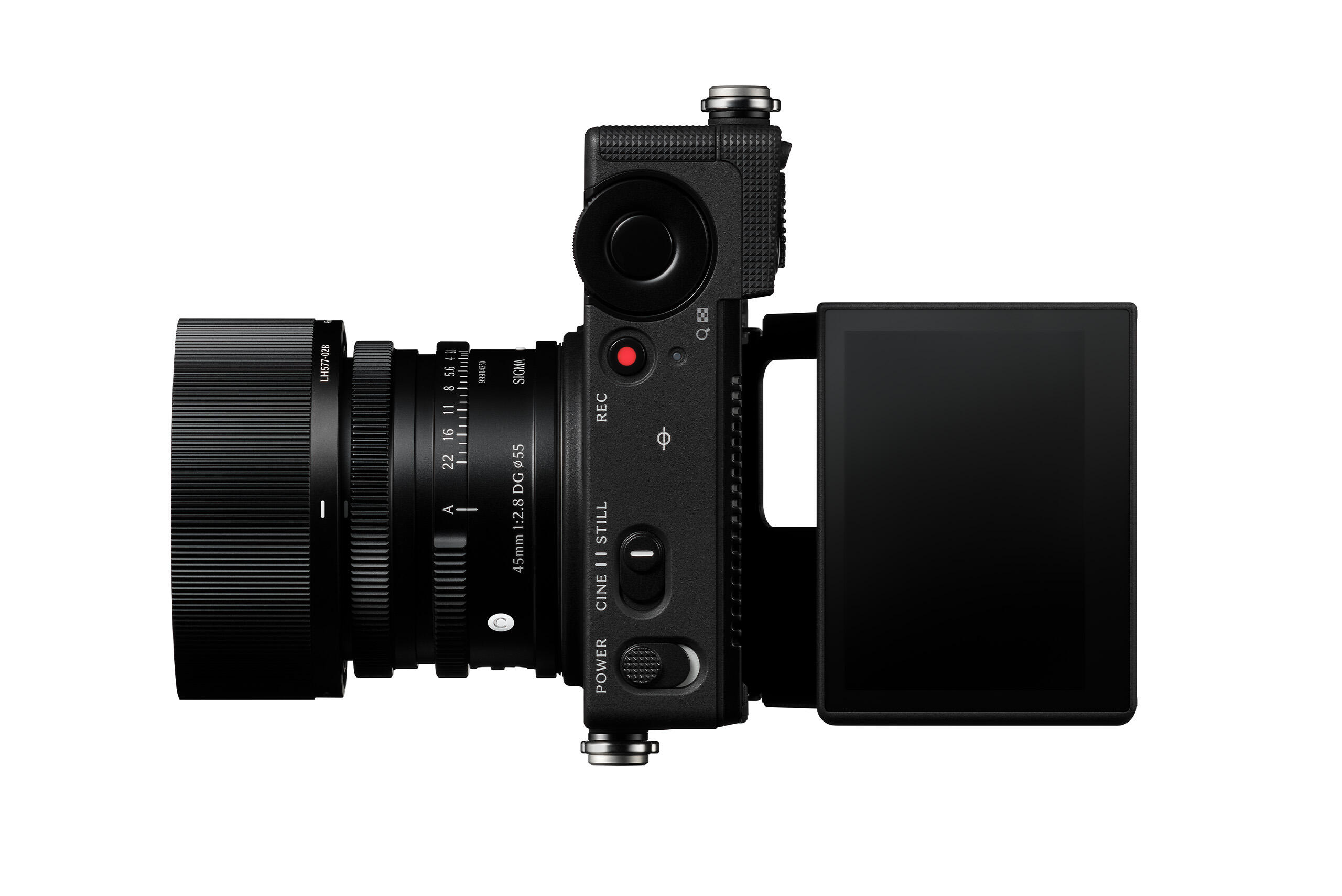
The rear 3.15-inch touchscreen now tilts approximately 90 degrees upward and 45 degrees downward.
That sounds like a modest mechanical change, but it makes the camera substantially more useful for waist-level photography, low-angle work, overhead framing and compact handheld video.
It also reduces the pressure to add an external monitor to a camera whose main attraction is supposed to be its size.
6K Open Gate Is the FP2's Big Cinema Feature
Switch the FP2 into CINE mode and the proposition changes substantially.
6K Open Gate capture uses the full sensor area rather than locking the filmmaker immediately into a conventional 16:9 crop.
That gives the editor more freedom to produce multiple deliverables from the same acquisition:
- 16:9 landscape video;
- 9:16 vertical social video;
- square or near-square crops;
- alternative cinematic aspect ratios;
- or modest reframing and stabilisation in post-production.
For commercial production where the same material has to serve YouTube, websites, presentations, Instagram, TikTok and other platforms, Open Gate is increasingly a workflow feature rather than a novelty.
This is also why the FP2 fits naturally beside our Cinema Lenses Explained guide, where sensor coverage and production format become part of the lens-buying decision rather than an afterthought.
ProRes RAW, L-Log and 14.1 Stops
The FP2 supports Apple ProRes RAW HQ and ProRes RAW alongside H.264 and H.265 recording.
Sigma specifies ProRes RAW at up to 6K 29.97p.
The camera also supports Leica's L-Log, creating a particularly interesting connection within the wider L-Mount ecosystem.
Sigma specifies up to 14.1 stops of dynamic range under its 4K full-frame L-Log measurement conditions, with seven stops of highlight headroom available from ISO 1250 upward.
That does not mean every FP2 recording mode delivers an unconditional 14.1-stop result. Dynamic range depends on recording mode, ISO, exposure and processing workflow.
But it confirms that Sigma is treating the FP2 as a serious grading-oriented cinema tool rather than merely adding video specifications to a stills camera.
32-Bit Float Audio — with an Important Qualification
The FP2 can also support 32-bit float audio recording.
That can make production sound considerably more forgiving by providing very wide recording headroom and reducing the risk of ruined takes caused by unexpected level changes.
There is, however, an important hardware condition: Sigma specifies 32-bit float operation when the optional HU-21 Hot Shoe Unit is used with compatible Panasonic DMW-XLR2 or DMW-DMS1 audio hardware.
Do not read “32-bit float audio” as meaning that every FP2 records 32-bit float through its built-in microphone without accessories. The professional implementation depends on additional hardware.
CINE and STILL Remain Separate Working Modes
A Small Switch with a Bigger Idea Behind It
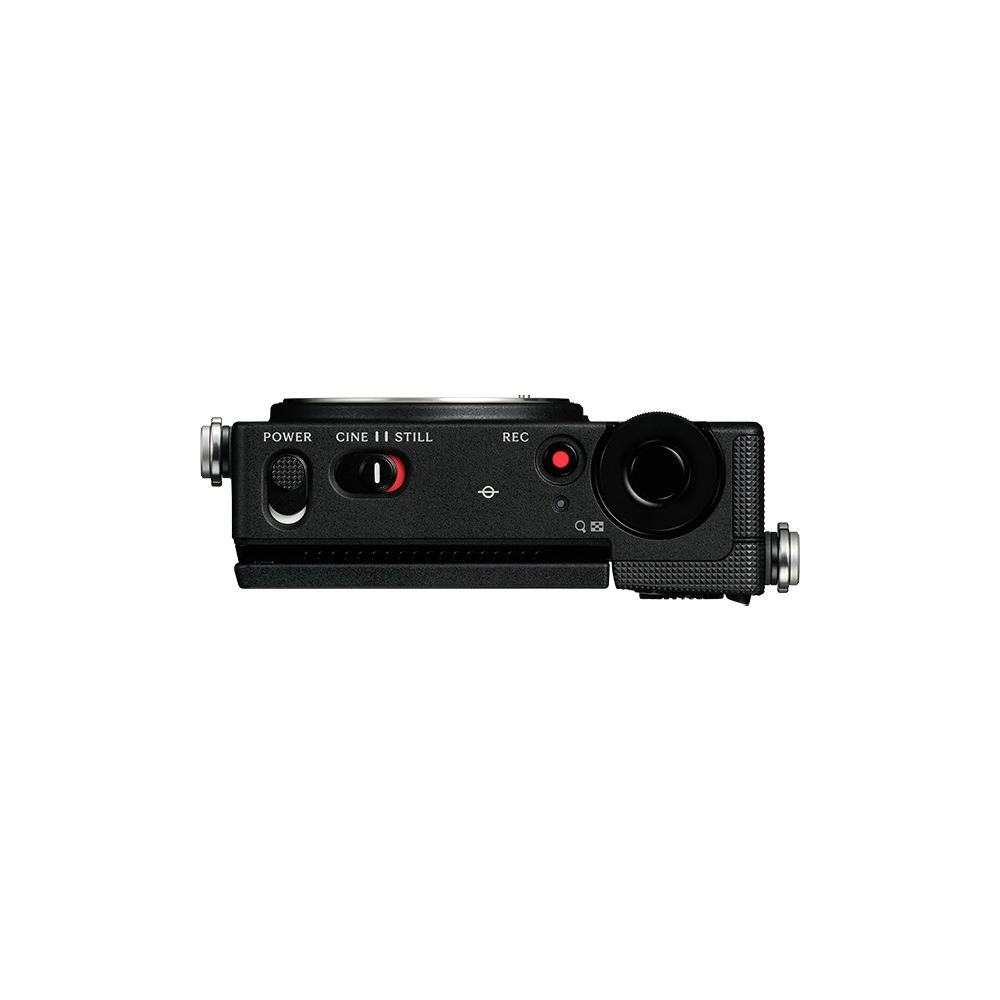
The physical CINE/STILL control remains central to Sigma's fp philosophy.
The camera does not merely enable video from within the stills interface. Each mode has its own UI and workflow.
That helps the FP2 function as two different tools without requiring the user to rebuild menus every time the job changes.
70GB of Internal Storage Is More Useful Than It Sounds
The FP2 includes approximately 70GB of internal storage in addition to its UHS-II SD card slot.
This is one of those features that may not sell a camera on a specification sheet but can become unexpectedly useful in real work.
If the card fills, the internal memory provides another recording destination.
It can also provide a fallback when a card has been forgotten, corrupted or removed.
For larger video workflows, the FP2 also supports portable SSD recording through its USB 3.2 connection.
That gives the camera three substantially different storage paths:
Internal Memory
Approximately 70GB always available inside the camera.
UHS-II SDXC
Conventional removable storage for stills and everyday recording.
External SSD
Useful when higher-capacity recording and a production-oriented workflow matter more than minimum rig size.
Flexible Workflow
The FP2 can stay tiny for simple work or scale into a larger cinema configuration when necessary.
376g — Sigma Has Not Abandoned the Point of the fp
The FP2 body weighs approximately 376g.
The original fp was approximately 370g body-only, meaning Sigma has added a partially stacked sensor, phase-detection AF, tilting display, larger battery system and significantly expanded cinema capability without fundamentally changing the compact philosophy.
The FP2 body measures approximately 112.8 × 69.9 × 41.8mm.
Sigma describes it as the world's smallest full-frame interchangeable-lens camera body as of October 2026.
That claim is manufacturer-defined and time-sensitive, but the underlying point is difficult to dispute: this is an exceptionally small full-frame body.
But There Is Still No IBIS
This is one of the most important limitations to understand before buying the FP2.
The camera does not use sensor-shift in-body image stabilisation.
Video can use electronic image stabilisation, and compatible lenses can provide their own optical stabilisation, but this is not the same proposition as a full-frame hybrid body with multi-axis IBIS.
That matters particularly for:
- slow-shutter handheld photography;
- unstabilised prime lenses;
- walking handheld video;
- low-light static subjects;
- and users accustomed to heavily stabilised hybrid systems.
For gimbal, tripod, cage or intentionally handheld cinema work, the absence of IBIS may be less important.
For a stills photographer who relies heavily on sensor stabilisation, it may be decisive.
Electronic Shutter Only Is Another Real Trade-Off
The FP2 uses an electronic shutter rather than a conventional mechanical shutter.
The faster partially stacked sensor makes that decision considerably easier to live with than it was on slower-readout designs, but it does not make the underlying trade-off disappear.
Electronic shutter behaviour still matters with:
- very fast movement;
- artificial lighting;
- flash photography;
- and certain high-speed motion patterns.
The FP2's full-frame flash synchronisation specification is relatively modest, reinforcing the fact that this is not designed primarily as a conventional studio flash body.
The FP2 is intentionally specialised: Sigma has not tried to turn it into a miniature version of every mainstream professional mirrorless camera. The strengths come directly from its compact modular design, but so do several of the compromises.
The EVF-21 Makes the FP2 a Very Different Photography Camera
The optional EVF-21 is a dedicated electronic viewfinder designed specifically for the FP2.
It uses a 0.5-inch OLED panel with approximately 5.76 million dots and can tilt upward by up to 90 degrees.
Because it connects through USB-C and can be removed entirely, the camera can remain extremely small when an EVF is unnecessary.
For stills photographers, however, the FP2 with EVF-21 may be the most coherent version of the system.
It gives the fp concept a more conventional eye-level shooting experience without permanently making the body larger.
Sigma FP2 Body vs EVF-21 vs 50mm F2 Kit
| Configuration |
Best For |
Why Choose It |
|
FP2 Body
|
Existing L-Mount owners, filmmakers and custom system builders |
Maximum freedom to choose lens, monitoring and rig configuration independently |
|
FP2 + EVF-21
|
Stills, street, documentary, travel and hybrid shooters |
Adds a high-resolution tilting eye-level finder without permanently changing the compact body |
|
FP2 + 50mm F2 DG Contemporary
|
Photographers building a compact full-frame system from zero |
Pairs the small FP2 body with a compact I-Series prime and classic 50mm perspective |
Which FP2 Configuration Would I Choose?
For Filmmaking
Start with the body. A filmmaker is more likely to add a cage, external storage, monitoring, audio hardware and lenses according to the production rather than relying on a conventional photography bundle.
For Street & Documentary
The EVF-21 version makes the most sense. The viewfinder preserves the compact philosophy while making eye-level composition substantially more natural.
For Everyday Photography
The 50mm F2 kit creates an immediately usable compact full-frame system with a lens that fits the FP2's physical philosophy.
For Existing L-Mount Owners
Body only is the logical choice. Sigma, Leica and Panasonic already provide an unusually broad range of compatible L-Mount glass.
The 50mm F2 Kit Is More Important Than a Typical Kit Lens
The 50mm F2 DG Contemporary is not a slow entry-level zoom added simply to make the camera usable out of the box.
It is part of Sigma's compact I-Series approach and makes conceptual sense on the FP2.
A small body only remains a small system if the lens is also relatively compact.
The 50mm perspective is particularly useful for:
- street photography;
- environmental portraiture;
- everyday documentary work;
- travel;
- detail photography;
- and compact narrative video.
Photographers building a broader L-Mount system should also see our Sigma 20-60mm F2.8-4 DG Contemporary & 85mm F1.2 DG Art guide, which covers two very different ways to expand a modern full-frame Sigma system.
L-Mount Is One of the FP2's Quiet Strengths
The FP2 uses L-Mount, so buyers are not restricted to Sigma lenses.
The wider ecosystem includes Sigma, Leica and Panasonic, creating a lens range that spans compact I-Series primes, professional zooms, fast Art lenses, Leica SL optics and specialised video-oriented options.
This is especially relevant because the FP2 itself can change roles so dramatically.
A compact prime preserves the pocketable philosophy.
A larger Art lens turns it into a more conventional high-performance full-frame system.
Cinema glass, cages and SSD recording can push it toward professional filmmaking.
The same mount also creates an interesting philosophical comparison with cameras such as the Leica SL3-S. Our Leica SL3-P vs SL3 vs SL3-S guide shows the opposite interpretation of a professional L-Mount body: larger, integrated and conventionally equipped rather than radically modular.
FP2 vs a Conventional Hybrid Camera
| FP2 Strength |
Conventional Hybrid Strength |
| Extremely compact full-frame body |
Integrated grip and conventional ergonomics |
| 6K Open Gate and cinema-oriented workflow |
Often stronger stills-first controls |
| ProRes RAW and L-Log |
May offer internal codecs without building a rig |
| 70GB internal memory plus SD and SSD options |
Often dual removable card slots |
| Modular external EVF |
Built-in EVF always available |
| 376g body |
Usually better grip with larger lenses |
| Electronic shutter only |
Many bodies retain mechanical shutter options |
| Video EIS only |
Many rivals provide full sensor-shift IBIS |
FP2 vs Compact Cinema Cameras
The FP2 also overlaps increasingly with compact cinema cameras.
But its philosophy is different from something like the Sony Cinema Line.
The Sony FX5, FX6 and FX3 are designed around progressively more production-oriented cinema-camera bodies.
The FP2 begins at the opposite end.
It starts as an extremely small full-frame box and allows the operator to add only what the production requires.
That can be attractive for:
- gimbal work;
- car rigs;
- travel filmmaking;
- documentary;
- small crews;
- B-camera work;
- compact anamorphic setups;
- and situations where size matters more than integrated production controls.
It is less obviously suited to operators who want built-in ND, SDI, professional XLR audio and conventional cinema ergonomics immediately available without accessories.
Director's Viewfinder and Anamorphic Support
The Director's Viewfinder function is another feature that reveals the FP2's cinema priorities.
It can simulate the shooting area of several cinema-camera systems, including current platforms such as ARRI ALEXA 35 and Sony VENICE 2 / BURANO.
The camera also supports anamorphic desqueeze display.
These are not features most photographers will ever need.
For cinematographers planning framing, lens coverage or compact production rigs, they make substantially more sense.
Two USB-C Ports and Full-Size HDMI Matter on a Body This Small
The FP2's connectivity is unusually interesting for such a compact camera.
Sigma specifies two separate USB-C connections:
- one USB 2.0 Type-C port supporting the EVF, UAC, cable release and power/charging;
- one USB 3.2 Type-C port supporting mass storage, webcam functions, audio, cable release and power/charging.
The camera also uses a full-size Type A HDMI 2.1 connection rather than a tiny Micro HDMI connector.
For a body intended to scale into production use, that is a welcome practical decision.
Who Is the Sigma FP2 For?
Hybrid Creator
Someone who genuinely moves between photography and serious video rather than using video as an occasional secondary feature.
Documentary Shooter
The small body, subject tracking, Open Gate capture and modular accessories fit unobtrusive location work particularly well.
L-Mount Photographer
An existing Sigma, Leica or Panasonic lens owner looking for an unusually compact second or everyday body.
Compact Cinema Builder
A filmmaker who prefers to start with the smallest possible camera and add monitoring, power, audio and support only when required.
Who Should Probably Look Elsewhere?
The FP2 is less convincing if your priorities are:
- integrated IBIS for handheld still photography;
- a permanently built-in EVF;
- dual card slots;
- a large conventional grip;
- mechanical-shutter operation;
- high-speed flash photography;
- or a cinema body with built-in ND and professional audio connectivity.
That does not make the FP2 incomplete.
It means Sigma is still protecting the central fp idea rather than trying to make the camera resemble every other full-frame mirrorless body.
Which Sigma FP2 Should You Buy?
Buy the body only if you already own L-Mount lenses or intend to build a dedicated video rig. It gives you the greatest freedom without paying for accessories you may not use.
Choose the EVF-21 bundle if still photography is a substantial part of your workflow. The external finder preserves the fp's modular philosophy while solving one of the main ergonomic compromises of the bare body.
Choose the 50mm F2 bundle if you are entering L-Mount from scratch and want the FP2 to remain genuinely compact. A small prime makes far more sense on this body than immediately attaching a large professional zoom.
Final Thoughts
The Sigma FP2 is not interesting because Sigma has simply put a newer sensor into the original fp.
The more important change is that several of the original concept's compromises have now been addressed without abandoning the reason the fp existed in the first place.
The body is still extraordinarily small.
But autofocus is now far more serious.
The partially stacked sensor should handle movement more effectively.
Twenty-frame-per-second shooting gives photographers meaningful speed.
The tilting screen improves real-world operation.
Seventy gigabytes of internal storage adds a practical safety net.
And the cinema side has moved decisively forward with 6K Open Gate, ProRes RAW, L-Log, professional monitoring tools and expanded audio options.
The compromises remain real: no IBIS, no built-in EVF, electronic shutter only and a modular design that can require additional accessories as the production becomes more demanding.
But those compromises are now easier to understand as deliberate choices rather than simple omissions.
The FP2 is not trying to be the most conventional full-frame camera.
It is trying to be one of the smallest serious full-frame imaging platforms that can move from still photography to cinema work without changing its basic identity.
For the right photographer or filmmaker, that is precisely what makes it interesting.
Further Reading